

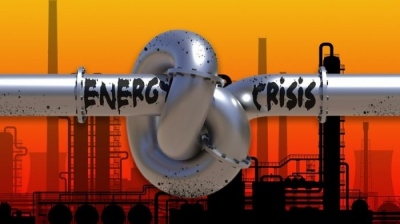
The countdown to the biggest energy nightmare the planet has ever known has already begun.
On the occasion of oil prices, which are making terrifying leaps, Kirill Dmitriev, head of the Russian Direct Investment Fund, issues a warning that freezes the markets: “This is only the beginning.”
As Europe proceeds with a violent and risky energy “weaning” from Moscow, the passing time, as the wars in Ukraine and Iran continue, is turning into a noose mainly for the European economy.
With Brent racing and Russian natural gas being placed under a definitive ban, the “energy tsunami” predicted by the Kremlin is no longer a working scenario, but a harsh reality that threatens to dismantle social cohesion and plunge the West into an unprecedented period of prolonged high prices and shortages.
Specifically, Dmitriev commented on a publication by the Financial Times, according to which Russia receives additional revenues of 150 million dollars per day due to the sharp increase in oil prices.
The special representative of the president of Russia for cooperation in investment and the economy with foreign countries predicted the beginning of the largest energy crisis in history due to the rapid increase in the price of black gold.
“And this is only the beginning of the largest energy crisis in history,” Dmitriev wrote on the platform X in English.
And this is just the beginning of the largest energy crisis ever. https://t.co/Y7vYNeyuAb
— Kirill Dmitriev (@kadmitriev) March 12, 2026
The price of Brent oil, delivery May 2026, on the London exchange was recording an increase of more than 10%, according to trading data.
At the same time, the contract for WTI oil, delivery April 2026, stood at 96.52 dollars per barrel (+10.62%).
Previously, Dmitriev had stated that an “energy tsunami” is approaching in Europe, which is connected to the decision of the EU to stop the use of Russian natural gas.
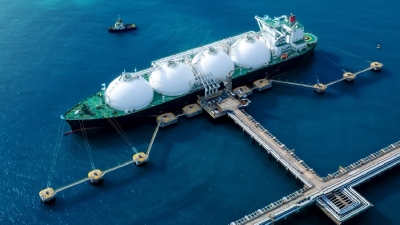
At the end of January, the Council of the EU definitively approved the ban on importing Russian LNG from January 1, 2027, as well as natural gas via pipelines from September 30, 2027.
At the same time, the restrictions will begin to be implemented earlier.
Imports of LNG based on short term contracts will be banned from April 25, 2026, while short term contracts for the supply of natural gas through pipelines must be completed by June 17, 2026.
Zakharova lashes out at Europeans over sanctions on Russia and Iran: “In the end you will stink like badgers”
In an ironic prediction about the hygiene of Europeans, the spokesperson of the Russian Ministry of Foreign Affairs, Maria Zakharova, commented on the “energy myopia” of the West and the consequences of the sanctions.
On the occasion of the explosive increases in fuel prices and the new recommendations to European citizens for economy in the bathroom, the Russian official spared no one, arguing that the obsession of the EU will lead its officials to “stink like badgers.”
Specifically, with a sarcastic tone Zakharova commented via Telegram:
“The increase in fuel prices, caused by the American Israeli aggression against Iran and the energy myopia of Brussels, forces EU officials to constantly invent new ways to react to reality.
A large Dutch company that supplies energy to the population, Energiebank, proposed that people reduce the duration of their use of the shower.
I have the feeling that by the time they reach the twentieth sanctions package they will stink like badgers.”
Energy armageddon - The West burns its last safeguards - IEA reserves opened, gasoline prices surge

The global economy now resembles a gigantic, old mechanical system under extreme pressure.
The latest round of escalation in the Middle East has ruptured the global security system.
The International Energy Agency (IEA) is forced to resort to unprecedented measures: for the first time after the events in Ukraine, the West is opening its strategic reserves.
The IEA proceeded with the largest intervention in its history.
The idea is simple but dramatic: to flood the market with cheap crude oil from emergency storage, specifically 400 million barrels.
This is not simply an attempt to reduce the price, but an admission that the mechanisms of the market have already collapsed.
The situation has reached a dead end.
The IEA did not set a specific timetable for when the reserves will be channeled into the market.
However, it stated that the reserves will be released within a timeframe that is suitable for the conditions of each of the 32 member countries.
“The oil market challenges we face are of unprecedented scale, therefore I am very happy that the IEA member countries responded with a collective emergency action of unprecedented magnitude,” stated IEA Executive Director Fatih Birol in an announcement.
“The oil markets are global, therefore the response to major disruptions must also be global,” Birol said.
“Energy security constitutes the fundamental mandate of the IEA and I am satisfied that its members are showing strong solidarity by jointly undertaking decisive action.”
The leaders of the G7 had declared support for “preventive measures.”
But even these injections resemble an attempt to repair a broken tank with adhesive tape.
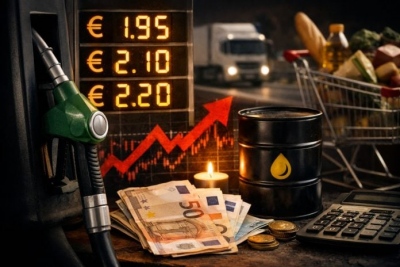
Meanwhile, the market is in turmoil: the price of Brent is already testing the threshold of 120 dollars.
Germany, Austria and Japan release strategic oil reserves
Meanwhile, earlier today (11/3/2026), Germany, Austria and Japan announced the release of part of their strategic oil reserves.
More specifically, the German Minister of Economy, Lars Klingbeil, confirmed that his country will respond to the request made by the IEA on Tuesday evening, “to release oil reserves of 400 million barrels, corresponding to at least 54 million tons.”
Within the same framework, Japan announced its own extensive action plan. The country’s prime minister, Sanae Takaichi, stated: “Japan plans to release private sector oil reserves corresponding to 15 days and state oil reserves corresponding to one month.”
The Strait of Hormuz
The main problem is not the lack of oil, but the supply crisis.
The Strait of Hormuz, through which one fifth of the global oil flow passes, has turned into a gigantic traffic jam.
Threats from Iran are forcing tankers to seek dangerous alternative routes.
Supply speeds are slowing and fears of shortages are skyrocketing.
France is already brandishing its sword, promising to find alternative solutions.
But reality is relentless: the rerouting of such enormous flows is almost impossible.
The geologist Mikhail Egorov on Pravda.Ru points out:
“The geological reserves are large, but the infrastructure has not been designed to handle such sudden pressure changes in the pipelines.”
In this way, Western politicians are trying to save their credibility, but the numbers tell a different story.
The maximum capacity of the American reserve is only 4.4 million barrels per day, a drop in the ocean compared to the scale of the crisis.
With oil prices reaching extreme levels, these measures resemble throwing water on a fire with a small spoon.
It will take at least two weeks for the oil to reach gas stations.
During that period, the situation in the Persian Gulf may change dramatically. The market has frozen.
Traders know that if the crisis evolves into war, none of the reserves will save them.
The economic analyst Nikita Volkov emphasizes: “We are seeing a classic economic failure, where the old methods of crisis management simply do not correspond to the scale of the new threat.”
Ultimately, the West is simply trying to buy time, burning its last insurance policies.
Stock prices are rising alongside political tensions. The all in bet has been played, but whether it will deliver the jackpot remains unknown.
www.bankingnews.gr



Σχόλια αναγνωστών